



 Buick Enclave: Child Restraint Systems
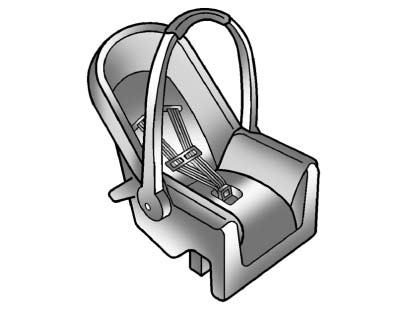
(A) Rear-Facing Infant Seat
► rear-facing infant seat (A) provides restraint with the seating surface against the back of the infant.The harness system holds the infant in place and, in a crash, acts to keep the infant positioned in the restraint.
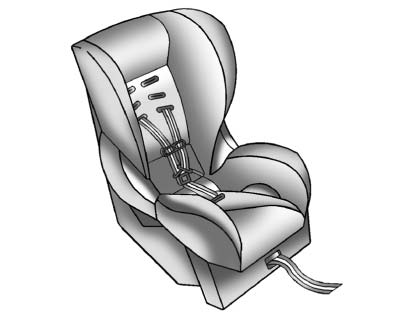
(B) Forward-Facing Child Seat
► forward-facing child seat (B) provides restraint for the child's body with the harness.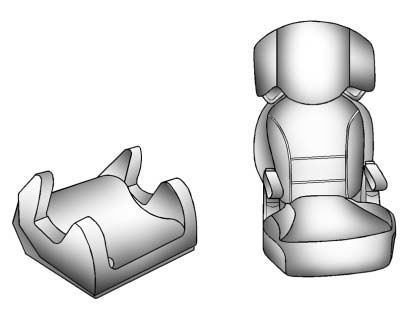
(C) Booster Seats
► booster seat (C) is a child restraint designed to improve the fit of the vehicle's safety belt system. ► booster seat can also help a child to see out the window.Securing an Add-On Child Restraint in the Vehicle
 WARNING
A child can be seriously injured or killed in a crash if the child restraint
is not properly secured in the vehicle. Secure the child restraint properly in the
vehicle using the vehicle safety belt or LATCH system, following the instructions
that came with that child restraint and the instructions in this manual.
To help reduce the chance of injury, the child restraint must be secured in the vehicle. Child restraint systems must be secured in vehicle seats by lap belts or the lap belt portion of a lap-shoulder belt, or by the LATCH system.
See Lower Anchors and Tethers for Children (LATCH System) for more information.
Children can be endangered in a crash if the child restraint is not properly secured in the vehicle.
When securing an add-on child restraint, refer to the instructions that come with the restraint which may be on the restraint itself or in a booklet, or both, and to this manual.
The child restraint instructions are important, so if they are not available, obtain a replacement copy from the manufacturer.
Keep in mind that an unsecured child restraint can move around in a collision or sudden stop and injure people in the vehicle. Be sure to properly secure any child restraint in the vehicle — even when no child is in it.
In some areas, Certified Child Passenger Safety Technicians (CPSTs) are available to inspect and demonstrate how to correctly use and install child restraints.
In the U.S., refer to the National Highway Traffic Safety Administration (NHTSA) website to locate the nearest child safety seat inspection station. For CPST availability in Canada, check with Transport Canada or the Provincial Ministry of Transportation office.
Securing the Child within the Child Restraint
WARNING
A child can be seriously injured or killed in a crash if the child is not properly
secured in the child restraint. Secure the child properly following the instructions
that came with that child restraint.
 Infants and Young Children
Everyone in a vehicle needs protection! This includes infants and all other children.
Neither the distance traveled nor the age and size of the traveler changes the need,
for everyone, to use safe ...
 Where to Put the Restraint
According to accident statistics, children and infants are safer when properly
restrained in a child restraint system or infant restraint system secured in a rear
seating position.
We recommend t ...
See also:
Seat belt care
The belt should be replaced if webbing becomes frayed, contaminated or damaged.
It is essential to replace the entire assembly after it has been worn in a severe
impact even if damage to the assem ...
Interior Care
To prevent dirt particle abrasions, regularly clean the vehicle's interior.
Immediately remove any soils. Note that newspapers or dark garments that can
transfer color to home furnishings can a ...
Using this Manual
To quickly locate information about the vehicle, use the Index in the back of
the manual. It is an alphabetical list of what is in the manual and the page number
where it can be found. ...


