



 Mercedes-Benz GL-Class: Maximum load rating
WARNING 
Do not overload the tires by exceeding the
specified load limit as indicated on the Tire
and Loading Information placard on the
driver's door B-pillar. Overloading the tires
can overheat them, possibly causing a
blowout. Overloading the tires can also result
in handling or steering problems, or brake
failure.
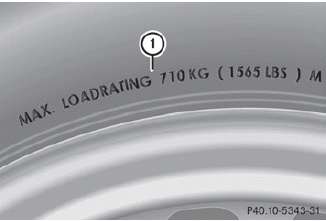
 The actual values for tires are specific to
each vehicle and may deviate from the
values in the illustration.
Maximum tire load 1 is the maximum permitted weight for which the tire is approved.
Further information on tire loads.
 Trailer load/noseweight
The trailer load/noseweight affects the gross
weight of the vehicle. If a trailer is attached,
the trailer load/noseweight is included in the
load along with occupants and luggage. The
trailer loa ...

See also:
Driving in Mud, Sand, Snow, or Ice
Use a low gear when driving in mud – the deeper the mud, the lower the gear.
Keep the vehicle moving to avoid getting stuck.
Traction changes when driving on sand. On loose sand, such as on beache ...
Ignition Transmission Lock Check
While parked, and with the parking brake set, try to turn the ignition to LOCK/OFF
in each shift lever position.
► The ignition should turn to LOCK/OFF only when the shift lever is in P (Park ...
Shift ranges
Introduction
When the automatic transmission is in
position D, it is possible to restrict or
derestrict the shift range.
The shift range selected is shown in the
multifunction display. The auto ...


