



 Cadillac Escalade: Tire Sealant and Compressor Kit
 WARNING
Idling a vehicle in an enclosed area with poor ventilation is dangerous. Engine exhaust may enter the vehicle. Engine exhaust contains carbon monoxide (CO) which cannot be seen or smelled. It can cause unconsciousness and even death. Never run the engine in an enclosed area that has no fresh air ventilation. For more information, see Engine Exhaust .
WARNING
Overinflating a tire could cause the tire to rupture and you or others could be injured. Be sure to read and follow the tire sealant and compressor kit instructions and inflate the tire to its recommended pressure. Do not exceed the recommended pressure.
WARNING
Storing the tire sealant and compressor kit or other equipment in the passenger compartment of the vehicle could cause injury. In a sudden stop or collision, loose equipment could strike someone. Store the tire sealant and compressor kit in its original location.
If this vehicle has a tire sealant and compressor kit, there may not be a spare tire, tire changing equipment, and on some vehicles there may not be a place to store a tire.
The tire sealant and compressor can be used to temporarily seal punctures up to 6 mm (¼ inch) in the tread area of the tire. It can also be used to inflate an under inflated tire.
If the tire has been separated from the wheel, has damaged sidewalls, or has a large puncture, the tire is too severely damaged for the tire sealant and compressor kit to be effective. See Roadside Service (U.S. and Canada) or Roadside Service (Mexico) .
Read and follow all of the tire sealant and compressor kit instructions.
The kit includes:
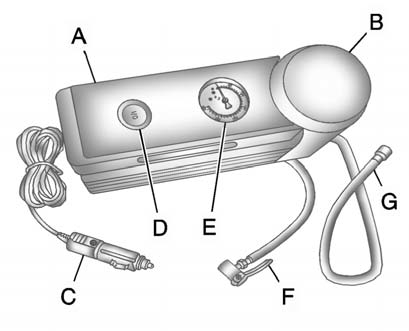
A. Air Compressor
B. Tire Sealant Canister
C. Power Plug
D. On/Off Button
E. Pressure Gauge
F. Air Only Hose (Black)
G. Sealant/Air Hose (Clear)
- Tire Sealant
- Using the Tire Sealant and Compressor Kit to Temporarily Seal and Inflate a Punctured Tire
- Using the Tire Sealant and Compressor Kit without Sealant to Inflate a Tire (Not Punctured)
- Removal and Installation of the Sealant Canister
 If a Tire Goes Flat
It is unusual for a tire to blow out while driving, especially if the tires are
maintained properly. See Tires . If air goes out of a tire, it is much
more likely to leak out slowly. But if th ...
 Tire Sealant
Read and follow the safe handling instructions on the label adhered to the sealant
canister.
Check the tire sealant expiration date on the sealant canister. The sealant canister
should be replaced ...
See also:
Checking the dynamic response fluid level
WARNING
Dynamic response fluid is highly toxic. Keep containers sealed and out of reach
of children. If accidental consumption of fluid is suspected, seek medical attention
immediately.
If ...
Erasing Speed Memory
The cruise control set speed is erased from memory by pressing the
button or if the ignition is turned
off. ...
Ethanol
NOTICE
This vehicle is not suitable for use with fuels containing more than 10% ethanol.
Do not use E85 fuels (85% ethanol content). Equipment necessary for the use of fuels
containing more ...


